 Batanes Philippines Tours
Sabtang Island, Batanes: What to Know Before You Go
Last reviewed August 2026
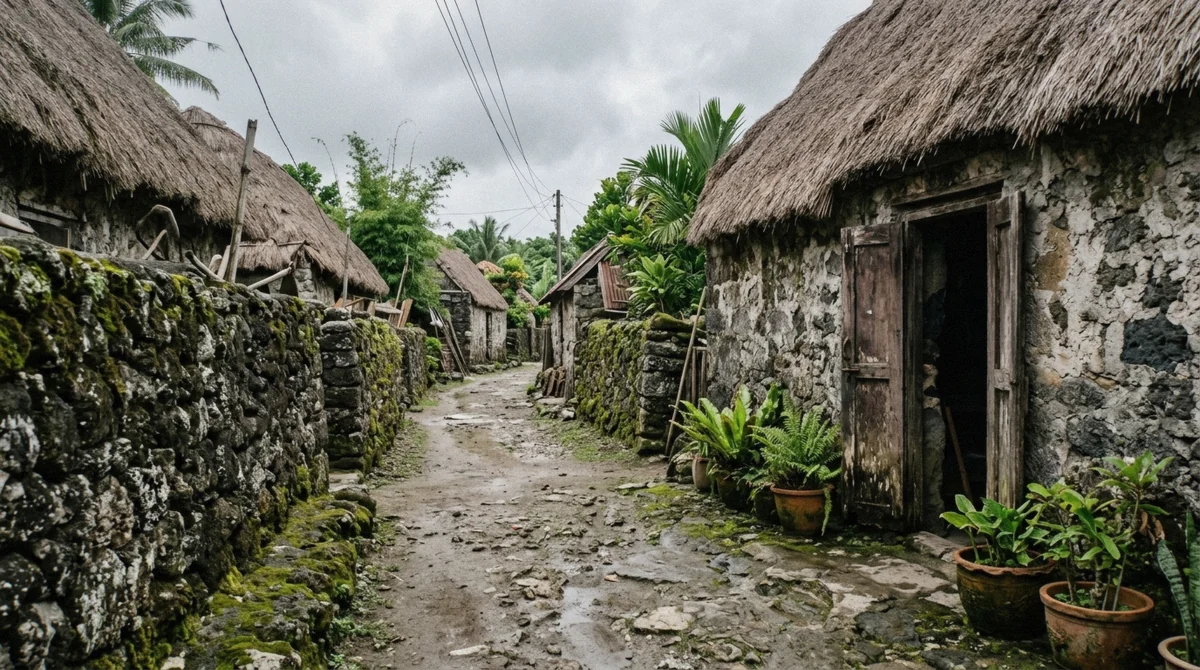
Sabtang Island, Batanes is the reason most people picture the province the way they do: rows of Ivatan stone houses under cogon-grass roofs, women in woven vakul headgear, hills folding down to the Pacific. It is also the hardest part of a Batanes trip to guarantee, because one boat crosses from Ivana Port in the morning and does not sail when the channel is rough. This page covers the crossing, the villages, the viewpoints and what a day there costs.
Quick answer
Sabtang is reached by faluwa from Ivana Port on the south coast of Batan Island: departure at roughly 06:00 to 07:00, usually once a day, 30 to 45 minutes across the channel, back around 13:00 to 14:00. The island holds the heritage villages of Savidug and Chavayan, the Savidug idjang fortress, the Chamantad-Tinyan viewpoint and Nakabuang Beach with the Ahaw stone arch. Guided days cost $156 or $162 with the boat, island registration and lunch included.
Key takeaways
- One boat, one morning departure, a Sabtang visit is a whole day or nothing
- Chavayan is where the vakul and kanayi are still woven from voyavoy palm fibre
- The PHP 100 Ivana LEAH fee is collected at the port in cash before you board
- Inside the 3-day package a Sabtang day comes as part of $96.79 total
- There is no way to withdraw cash on the island. What to budget
- Sabtang is one of three routes, see the full comparison
Ways to Do Sabtang
Two standalone day tours and the package that folds Sabtang into the wider circuit. All three include the faluwa crossing, island registration and lunch. Prices read in August 2026.

Batanes: Sabtang Island Tour with Lunch
The shorter of the two Sabtang listings and the one sold as a private group. It covers the two heritage villages rather than a long stop…
- Cancellation
- Free cancellation 24h
- Operator
- Gladex Travel and Tours Corp.
Batanes: Sabtang Island Scenic & Adventure Tour
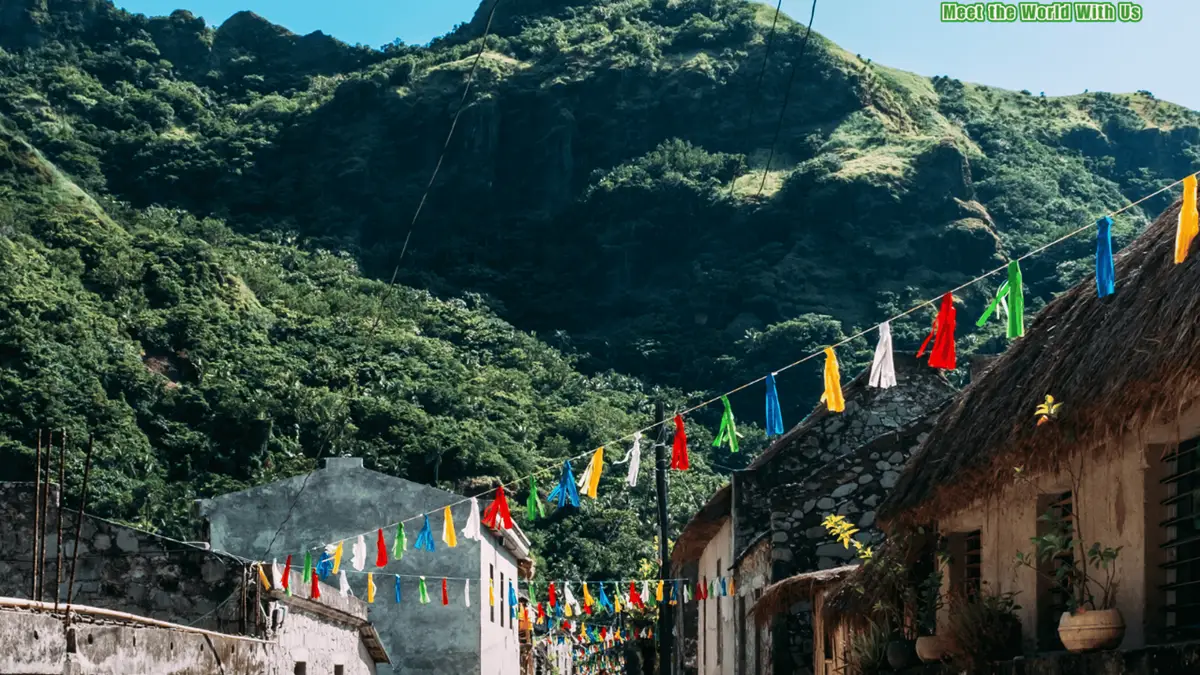
The fullest Sabtang stop list compared here, and the only one that names the Savidug idjang fortress viewpoint, the Chamantad–Tinyan view deck and the Ahaw arch…
- Cancellation
- Free cancellation 24h
- Operator
- Sarah Lea Travel and Tours Inc.
3-Day Batanes Package: North Batan, Sabtang & South Batan
The cheapest way to cover all three standard routes. Day 1 runs 12:00–18:00 on North Batan, day 2 leaves at 05:30 for the Sabtang boat, day…
- Cancellation
- Free cancellation 48h
- Operator
- an operator the listing does not name (reviewers name Chanpan Tours)
Getting There: the Faluwa
The crossing is the part of a Batanes trip that most often does not happen, and it deserves the first section rather than the last.
What a faluwa is
The faluwa is the traditional Ivatan boat: round-bottomed, with no outriggers, built to ride the swell rather than sit on top of it. It is the only way visitors cross to Sabtang.
It leaves Ivana Port at roughly 06:00 to 07:00, usually only once a day, and comes back from Sabtang around 13:00 to 14:00. The crossing takes 30 to 45 minutes over water where the currents of the West Philippine Sea and the Pacific meet, a stretch with a reputation among Filipino travellers for being genuinely rough.
Why every Sabtang tour starts before dawn
Ivana Port is about an hour's drive south of Basco. Add the boarding window and you get the pickup times published on the listings: the 3-day package collects you at 05:30 on its Sabtang day, and both standalone Sabtang tours run a road transfer south in the dark.
There is no afternoon crossing to fall back on. If you miss the morning boat, you have missed Sabtang.
Seasickness is a real planning item
Reviewers who normally travel well report struggling on this crossing. One traveller in April 2025 wrote that she took an anti-motion-sickness tablet beforehand and still did not feel good on the twenty-minute return leg, and advised anyone prone to it to do the same before both directions.
Spray comes over the sides. A windbreaker or poncho is worth having, and so is a dry bag for anything electronic.
When it does not sail
When the channel is up, the boat stays in port. There is no second crossing, no bridge and no flight. The Gladex Sabtang listing states plainly that the itinerary may change due to weather or unforeseen circumstances for safety.
Booked inside a multi-day package, that is manageable, the operator swaps the Sabtang day with a road route on Batan, and reviewers describe agencies rearranging the schedule the night before to save an itinerary. Booked as a standalone day on a fixed date, there is nothing to swap. Put Sabtang early in your trip, and prefer the dry season: December to May, settled February to April, driest in April. Month by month.
The Villages
Sabtang's draw is not a viewpoint. It is two villages that never stopped being villages.
Savidug
Rows of traditional Ivatan stone houses along narrow pathways, with metre-thick lime-and-stone walls under cogon-grass roofs. The architecture is a direct answer to the wind that gives the province its nickname: anything lighter does not survive a Luzon Strait typhoon.
The Sto. Tomas de Aquinas Chapel stands inside the village, centuries old and built in the same stone. These are lived-in houses, not exhibits, people hang washing between them and farm the slopes above.
Chavayan
Described on the listing as the best-preserved traditional village in Batanes, and that is the consensus. Centuries-old stone houses, and the craft the island is known for: the vakul, the woman's head-and-back covering woven from stripped voyavoy palm fibre, and the kanayi, the man's vest, both still made by hand by local weavers and still worn for work in the fields.
The Sta. Rosa de Lima Chapel serves the community. On the multi-day packages' route lists it is noted as the only chapel in the area still topped with cogon grass.
If you buy a vakul, buy it from the weavers here rather than from a stall in Basco.
How to behave in them
Both villages are homes. Guides ask visitors to keep to the paths and to ask before photographing people, their houses or their headgear. The scenic and adventure tour bans sleeveless shirts, alcohol and littering outright; the reason is the two chapels and the two communities on the route rather than an operator's preference.
Smoking in public is prohibited across Batanes anyway.
The Viewpoints, the Arch and the Fortress
The rest of the island is coastline, and one piece of pre-colonial archaeology.
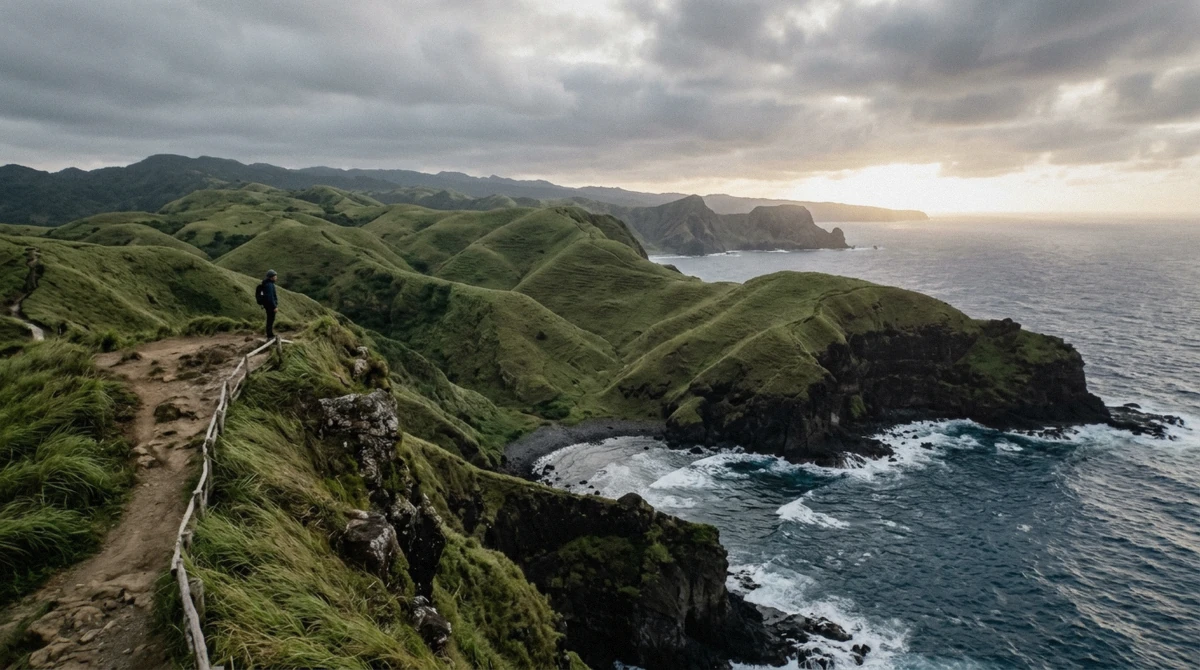
Chamantad-Tinyan Viewpoint
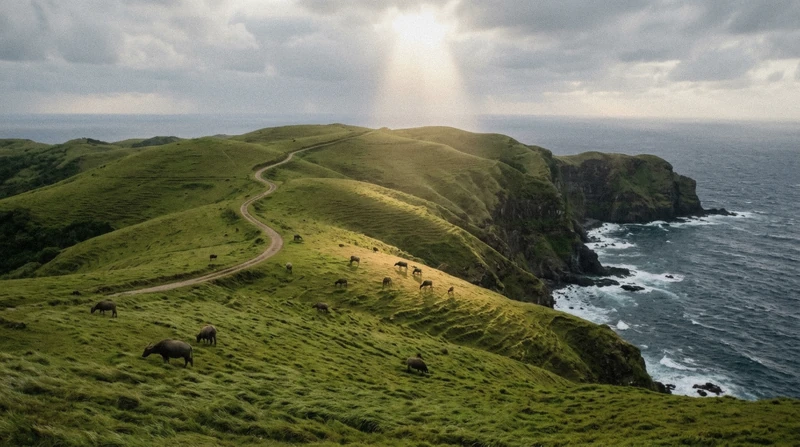
Rolling hills folding down to a cove on the Pacific side, cliffs on either hand, ocean beyond. It is the photograph that appears whenever Sabtang is written about, and it is exposed to the wind on all sides.
Named on the scenic and adventure tour and on both multi-day packages' Sabtang lists.
Nakabuang Beach and the Ahaw Arch
White sand at Morong on the west side, calm on a settled day, with the Ahaw natural stone arch standing at the waterline, a limestone formation shaped by wave and time that has become the island's symbol.
This is the swimming stop if there is one, and usually the last thing you see before the boat back.
The Savidug idjang
An ancient Ivatan fortress built on elevated terrain, a defensive settlement on a rock outcrop, occupied long before the Spanish arrived, and evidence of a society that organised itself around defensible high ground.
It is the one stop on Sabtang that is archaeological rather than scenic. Only the scenic and adventure tour names it in its route; tours view it from a designated viewpoint rather than climbing it.
The rest of the stop list
San Vicente Ferrer Church at the port is usually the first thing you see on landing. The the multi-day packages' attraction lists add Mayahao and the Malakadang lighthouse to the standard set.
Sabtang is small. A full day covers the island's headline sites without rushing, which is why nobody sells a half-day version, the boat schedule would not allow it anyway.
What the island is like between the stops
Sabtang is roughly sixteen square kilometres with a few thousand residents spread across a handful of barangays, and the road that links them runs close to the coast most of the way. The driving between stops is short, this is not a day of long transfers, which is why an eight-hour tour can name eight stops without rushing.
What you notice in the gaps is how little is built. Fields run to cliff edges, cattle graze loose, and the villages appear as clusters of grey stone rather than as anything sprawling. There are no resorts, no strip of restaurants and no beach clubs. Lunch on every tour compared here is arranged by the operator because arranging it yourself is not straightforward.
The island also has no reliable mobile coverage in places and no way to withdraw money, which is the practical reason every listing tells you to bring cash before boarding.
What a Sabtang Day Costs
Two ways to buy it, and the arithmetic is closer than the headline prices suggest.
Guided
The Gladex tour with lunch is $156 per person for seven hours as a private group, focused on Savidug and Chavayan. The Sarah Lea scenic and adventure tour is $162 for eight hours with eight stops written out in running order and purified drinking water included.
Both include the road transfer from Basco to Ivana Port and back, the faluwa round trip, island registration fees, lunch and guide services.
Inside the 3-day package, a full Sabtang day comes as part of $96.79 total, less than either standalone tour, and with North Batan and South Batan attached.
| How you do it | Cost | Includes | Catch |
|---|---|---|---|
| Sabtang day, seven hours | $156 per person | Transfers, boat, registration, lunch, guide | Two villages named, private group |
| Sabtang day, eight hours | $162 per person | The same plus drinking water and pickup | Eight stops named, group size not stated |
| Inside the three-day package | $96.79 total | Sabtang plus both Batan routes, lunch daily | Reschedulable if the channel closes |
| Independently | About PHP 1,250 for two | Boat, island fee, tricycle | You arrange transport to Ivana before dawn |
Independently
The boat is reported at about PHP 100 per person each way, plus a PHP 350 island environmental fee, plus around PHP 800 for a tricycle for two on the island, and you still need your own transport from Basco to Ivana Port before dawn and back afterwards.
On top of that sits the PHP 100 Ivana LEAH fee, in force since January 2026 and collected in cash at the port, and the PHP 405 provincial visitor registration that applies to your whole trip. Every fee explained.
By the time all of that is assembled, the gap between doing it yourself and buying a guided day is narrower than it looks, and the registration portal now asks every visitor to name a DOT-accredited operator anyway.
Cash, before you board
There is no way to withdraw money on Sabtang. Basco has two banks, Landbank and PNB, and no money-changing facilities in the province.
Whatever pesos you carry onto the faluwa is what you have for the day: the LEAH fee at the port, anything you buy from the weavers in Chavayan, drinks, and whatever the village stores have.
When to go, and how that changes the odds
The dry season runs December to May, February to April is the settled stretch and April is the driest month of the year. Typhoon season is June to November, worst in August. On Batan those months cost you a grey photograph; on the Ivana channel they decide whether the day happens at all.
The Amihan northeast wind blows roughly November to February and makes the crossing choppier without necessarily stopping it. March and April are the calmest sea conditions of the year, which is why they are also the busiest and the most expensive for flights.
If your trip falls outside that window, book Sabtang on the earliest possible day of your stay and treat the rest of the itinerary as the fallback. The month-by-month breakdown has the full picture.
Sabtang Island Questions
What is Sabtang Island known for?
Its preserved Ivatan stone villages, Savidug and Chavayan, where houses of metre-thick lime and stone under cogon-grass roofs are still lived in, and where the vakul and kanayi headgear is still woven by hand from voyavoy palm fibre. Also the Chamantad-Tinyan viewpoint, the Savidug idjang fortress and the Ahaw stone arch at Nakabuang Beach.
What are the tourist spots in Sabtang?
San Vicente Ferrer Church at the port, the Savidug stone houses and the Sto. Tomas de Aquinas Chapel, the Savidug idjang viewpoint, the Chamantad-Tinyan View Deck, Chavayan village and the Sta. Rosa de Lima Chapel, Nakabuang Beach at Morong with the Ahaw arch, plus Mayahao and the Malakadang lighthouse.
How do you get to Sabtang Island?
By faluwa from Ivana Port on the south coast of Batan Island, about an hour's drive south of Basco. The boat leaves at roughly 06:00 to 07:00, usually once a day, and returns around 13:00 to 14:00. There is no airport and no alternative crossing.
How long is the boat ride to Sabtang?
Thirty to forty-five minutes, across water where West Philippine Sea and Pacific currents meet. It has a reputation for being rough, and reviewers who took anti-motion-sickness tablets beforehand still report struggling. It does not sail at all when the channel is up.
Can you stay overnight on Sabtang?
Every tour compared on this site is a day trip, the boat schedule makes a day trip the standard shape, and none of the listings here offers accommodation on the island. If you want to stay, that is arranged locally and separately, and you should confirm the return boat before you commit.
Why are Batanes so expensive?
The flight, not the island. Basco Airport has one runway that cannot be extended, so return fares run roughly PHP 4,000 to PHP 15,000. A guided Sabtang day is $156 to $162, and inside a three-day package the whole circuit is $96.79. The full budget.
Should I book Sabtang as a standalone day or in a package?
In a package, if you are doing more than one route. It is cheaper, and more importantly it is reschedulable, when the channel closes, the operator swaps the Sabtang day for a road route on Batan. A standalone booking on a fixed date has nothing to swap with.